
health
Comparing Moxidectin Administration Routes in Wombats
Stott, E. K., Skerratt, L. F., Whittem, T., Leeming, M., Pillay, K., Doran, G. S., Gardner, B., Lynch, M., Klein, M., Holz, P., Chen, T., Hufschmid, J., and Woodward, A. P. (2026). Pharmacokinetics of moxidectin in bare‐nosed wombats ( Vombatus ursinus) after intravenous, sub‐cutaneous and transdermal administration. Journal of Veterinary Pharmacology and Therapeutics early online. doi: 10.1111/jvp.70074.
What it’s about
We just published a paper that describes how the drug moxidectin (Cydectin®) behaves when it is administered to bare-nosed wombats by different routes: the intravenous, subcutaneous and transdermal pharmacokinetics.
Why it matters
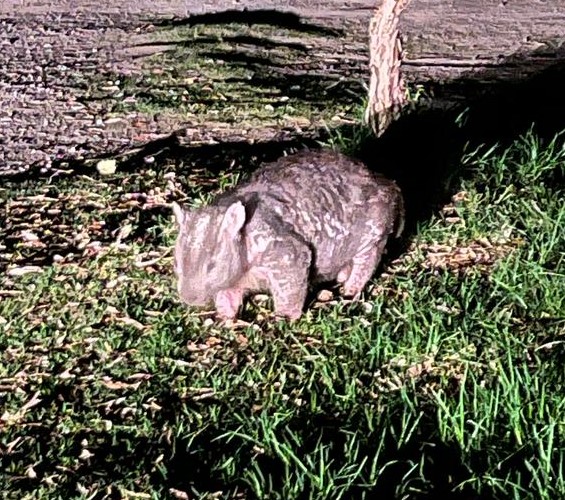
Sarcoptic mange is an infectious skin disease caused by the mite ‘Sarcoptes scabiei’. The mites burrow under the skin, causing a cascade of effects for the wombats, including severe crusting and cracking of the skin, hair loss, emaciation, disrupted control of body temperature, increased activity, reduced efficiency in feeding, and eventually death. There have also been some documented instances of significant local population decline. Sarcoptic mange affects many mammals worldwide (including humans), but wombats are disproportionately affected due to aspects of their ecology and physiology. This disease is a significant animal welfare concern and has at times raised conservation concerns.
Current approaches are mostly focused on treating individuals in the field, using one of two anti-parasitic drugs, Cydectin® (active ingredient is moxidectin) and Bravecto® (active ingredient is Fluralaner). Treatment is almost entirely conducted by volunteers in the field, who apply the drug to the wombats via transdermal application (onto the skin). Until recently, there has been a shortage of scientific evidence informing treatment practices for moxidectin, with regimens guided by anecdotal evidence and recommendations from livestock animal research. However, there are problems with extrapolating information on the behaviour of drugs across different species, because there are often significant differences. This is particularly true for marsupials, who often metabolise drugs differently to placental mammals. In order to fully understand the pharmacokinetic behaviour of a drug, it is also important to include direct administration into the blood stream as a baseline comparison, bypassing potential delays to absorption from the point of administration.
What did we do?
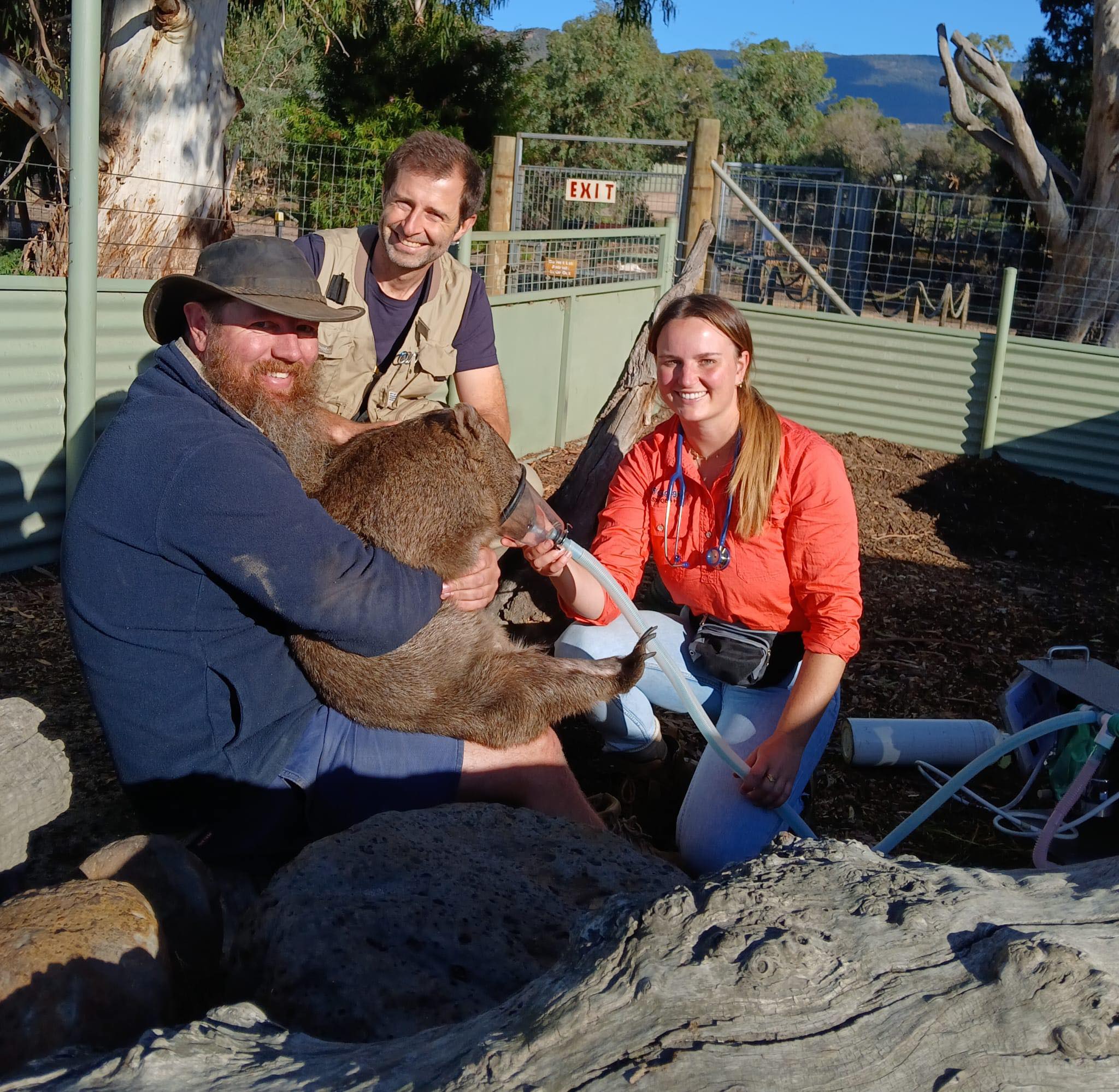
We recruited 13 healthy, captive wombats representing a range of ages from Victoria and New South Wales. First we safely injected a specifically formulated, small dose of moxidectin directly into the blood stream (intravenous (IV)) of five wombats, followed by serial blood samples to determine blood concentrations of the drug. In a second phase, and using a different set of eight wombats, we injected the drug first under the skin (subcutaneous), and about four week later we administered it onto the skin (transdermal) of the same wombats. Transdermal application means that a calculated volume of drug is applied to one area of the body, typically, and also in this study, that is over the back of the animal. Each type of administration was followed by a series of blood samples to look at blood concentrations over time.
What did we find?
When given subcutaneously, about 20% of the drug was absorbed quickly, after which the absorption process slowed down. This resulted in a half-life of approximately 26.3 days. When administered onto the skin, on the other hand, the estimated half-life was 21.78h hours.
Perhaps the most interesting finding was that, based on our data, the bioavailability of the drug after transdermal administration was less than 0.6%. That means less than 0.6% of all the drug administered by that route was actually absorbed into the blood stream. In comparison, the bioavailability after subcutaneous administration was 95.7%.
What does it mean?
Our findings show that via the transdermal route, very little moxidectin makes it into the blood stream (less than 1%). To the best of our knowledge, the mode of action of moxidectin is to be absorbed into the blood stream and then distributed all around the body, where it can act in the skin to kill the mites. The findings thus suggest that only a very small proportion of the applied drug can be distributed in that way.
Transdermal application thus appears to be quite inefficient compared to the subcutaneous route. However, there are practical obstacles to applying the drug subcutaneously to wild wombats: firstly, it is difficult to catch wild wombats, because they are quite big, heavy and fast (and at times even aggressive); it is also stressful for wombats to be caught; and finally, it would require treaters, who are often volunteers with no veterinary training, to be skilled in giving these injections.
It is possible that there are some direct therapeutic effects to the areas of the skin that the drug is applied to. However, there is currently no published information available to support this hypothesis. It is important to note that this study did NOT look at the effectiveness of the administered dose.
Although these results may suggest that low bioavailability could be overcome by applying more drug, the volume already used is substantial. In this study, we applied 1-2ml per kg body weight (for a 30kg wombat, that was 60ml, or roughly a quarter of a measuring cup). There are important considerations regarding using higher volumes. For example, they may result in more run-off into the environment rather than greater absorption. This is important, because moxidectin has been shown to have toxic effects to invertebrates.
Our findings suggest that, if transdermal application of moxidectin is used for the treatment of mange in wombats, it may be useful to investigate ways of optimising bioavailability, such as methods to increase drug absorption.
While it is important to note that this study did NOT investigate the effectiveness of the administered dose, we also conducted some modelling, using our pharmacokinetic data combined with what is known about treatment efficacy in other species with sarcoptic mange. This suggested that it would be worth further exploring a transdermal treatment regime of 10mg/kg weekly over 5 weeks.
Want to know more?
If you want to know more about this study, you can read the paper – and/or you can contact us directly.
 Wildlife Health Blog