
Animals, humans and ecosystems – why we truly live in One World – One Health
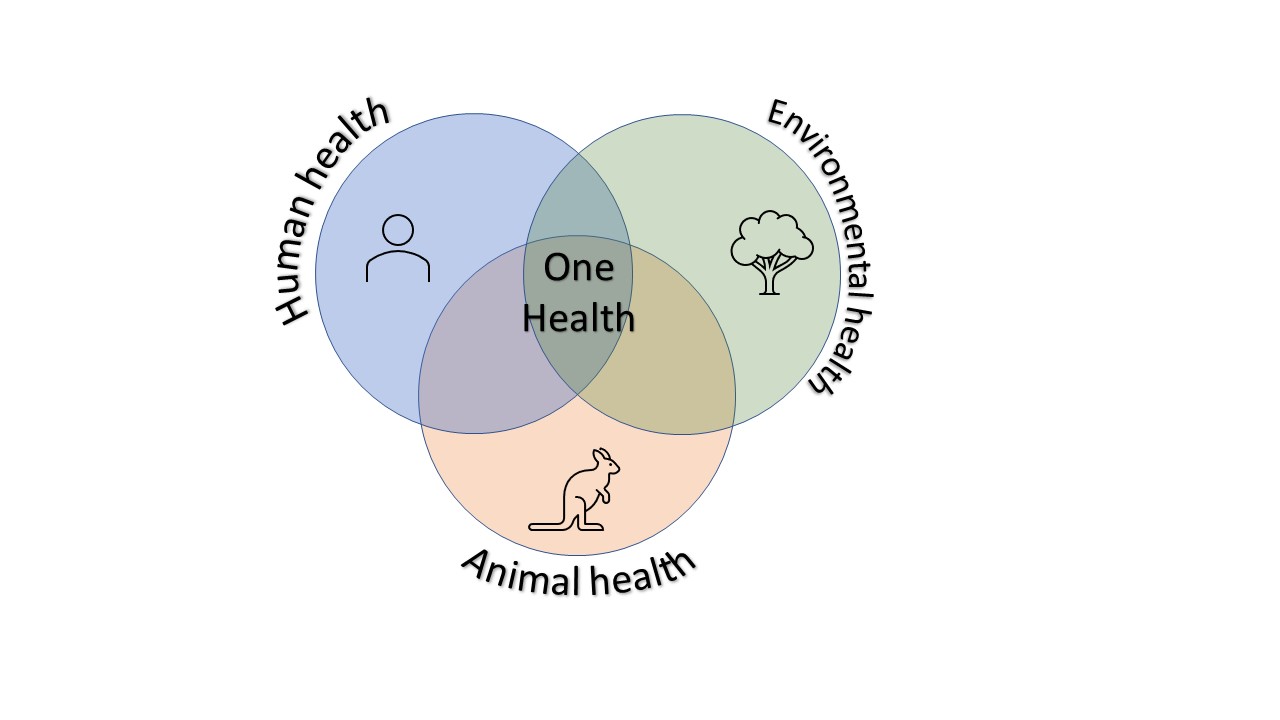
“Once upon a time, when we thought of diseases, we tended to think of human diseases, animal diseases and the occasional zoonotic disease (diseases that can be spread from animals to humans). The health of the environment around us, was only an afterthought at the best of times.
But the world is getting smaller in so many different ways….there are more people in the world than ever, and we move around more widely and faster than ever. And the environment around us is also changing at a rapid pace. The world’s human population is at unprecedented levels, requiring unprecedented levels of natural resources for everything from new cities to food and mobile phones.
Global travel is a fantastic part of modern life, at least for those of us lucky enough to live in relatively well-off countries; it widens our horizons and brings us rich experiences that we draw on for the rest of our lives. However, whenever we travel, we also bring some uninvited and unintentional friends with us – viruses, bacteria and other parasites – some of which we leave behind at our travel destinations.”
/https://public-media.si-cdn.com/filer/79/4a/794a7e74-8c99-4fde-abcd-a303bc302ba1/sars-cov-19.jpg)
Image of SARC-Coronavirus 2, the virus responsible for causing COVID 19 (Image by CDC)
I actually wrote the start of this blog about several years ago – well before COVID19 turned our world upside down, plunging us into a world of new rules that few of us would have imagined possible. It’s fair to say that COVID19 has been predicted, and expected, by many of us working in One Health and Wildlife Health. Well, strictly speaking not COVID19, but something like it. And while we don’t know yet exactly how this little spark of a virus that lit a tinder box managed to come into our lives, most scientists who have worked on this believe that it was a spill over from wildlife into humans somewhere along track. It seems likely that the original virus came from some bats – how it ended up causing the original outbreak in Wuhan is not (yet) known.
So what actually is a spill over – and why do they happen?
Imagine a cup of coffee. Because the cup is made to contain the coffee, the coffee doesn’t damage the cup at all. Now imagine the cup sits on the edge of a table on a delicate carpet, and someone hits the cup with their arm by mistake. The cup doesn’t fall over, but some of the coffee spills over, lands on the carpet and damages that piece of carpet irreparably.

This analogy explains quite nicely what happens when you have a disease spill over. The cup is some sort of living organism, typically an animal – and often, but not always, wildlife. The coffee, is a virus or other disease organism that lives in the animal. The animal has adapted to the disease organism, so it’s not really damaged by the disease. We refer to an animal like that as a “disease reservoir”. Then suddenly, for some reason, something happens to “hit the cup”. For example, the animal changes its geographic distribution bringing it into contact with new species; or the animal stays in the same area, but some other species, including humans, come into its area. So now, the disease spills over from the animal to another species (=the carpet), which is damaged by the disease.
There are many events that lead to disease spill over events – but in many, if not most, cases, human actions are involved in creating the circumstances leading to these events. For example, destruction of wildlife habitat for logging, agriculture or building new cities or towns, may lead to the wildlife in that habitat having to move away to find food and other resources it depends on. Extending pastoral land into previously untouched areas, leads to contacts between domestic animals and wildlife that previously didn’t exist. Capturing wildlife for the illegal pet trade, hunting it to sell it as bushmeat or for medicinal purposes, moves wildlife from areas with little to no human contact right into the middle of busy city centres, markets (where they are sometimes placed in close proximity to a whole range of other wildlife species) and human contact.
All this creates ample opportunity for a disease spill over. Unfortunately, we’re creating more and more of these events, therefore providing an increasing number of opportunities for the coffee cup to spill coffee onto the precious carpet. At present, we’re spending several fortunes on trying to steam clean the carpet, or in other words coming up with medical solutions to the disease problems we create. But we’re not spending nearly enough on preventing the cup from spilling over in the first place and we still have very limited understanding of the diseases of wildlife or the very complex interactions that lead the factors mentioned above to result in a spill over.
One study estimated that worldwide we’ve lost on average approximately US$212 billion to zoonotic viral disease outbreaks per year since 1950. By October 2021, Covid19 had caused almost 5 million deaths worldwide. And at the rate the factors driving spill overs are increasing, we are likely to see more of these outbreaks more often, which means that if we don’t start to increase our efforts to prevent and reduce spill overs from happening – major disease outbreaks will increasingly cost human lives and burden our economy.
 Wildlife Health Blog